
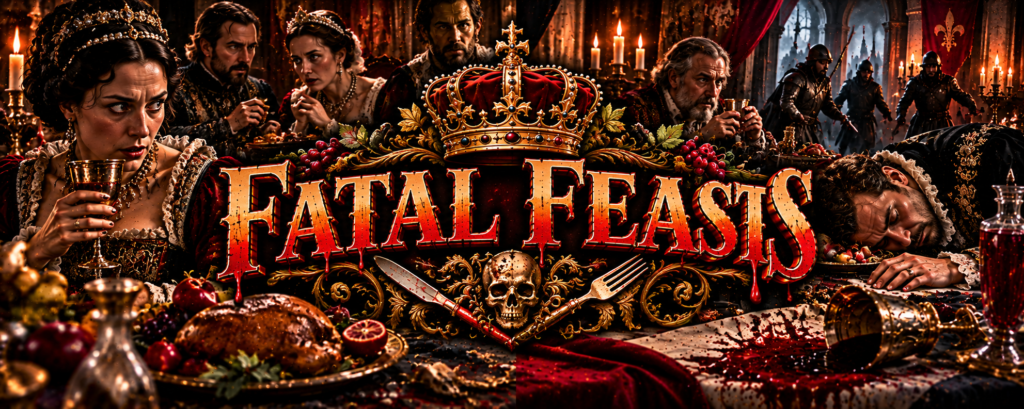
A magnificent banquet was supposed to represent hospitality, celebration, alliance, and abundance. Tables groaned beneath roasted meats and elaborate desserts, wine flowed freely, musicians entertained the guests, and political rivals temporarily sat beneath the same roof. Yet throughout history, some invitations to dinner concealed something far darker. Behind the candles, silverware, and overflowing goblets waited poison, betrayal, assassination, massacre, and death.
Fatal Feasts explores the banquets, wedding celebrations, royal dinners, diplomatic gatherings, drinking parties, and supposedly friendly meals that ended in bloodshed. Some victims were poisoned at the table. Others accepted invitations from enemies who had no intention of allowing them to leave alive. In still other cases, a celebration descended unexpectedly into violence, turning a night of feasting into one of history’s most infamous disasters.
Few stories capture the danger of medieval hospitality better than Scotland’s notorious Black Dinner of 1440. The young Earl of Douglas and his brother were invited to dine with the young King James II at Edinburgh Castle. According to the traditional account, a black bull’s head—the symbol of death—was dramatically placed before them before the brothers were seized, subjected to a hurried proceeding, and executed. Some details of the story were embellished by later tradition, but the deaths themselves became an enduring symbol of hospitality transformed into political betrayal.
Sweden produced an even bloodier example with the Stockholm Bloodbath of 1520. Celebrations surrounding the coronation of Christian II were followed by arrests, trials for heresy, and the execution of scores of Swedish nobles, clergy, and prominent citizens. What began amid coronation festivities became one of Scandinavia’s most notorious political massacres and helped fuel the rebellion that ultimately removed Sweden from the Kalmar Union.
Weddings could be equally dangerous. Royal and aristocratic marriages gathered rival families, political factions, military leaders, and powerful nobles in one place, sometimes creating the perfect conditions for violence. Celebrations surrounding the marriage of Henry of Navarre and Margaret of Valois in Paris in 1572 brought large numbers of prominent Protestants into the capital shortly before the St. Bartholomew’s Day Massacre, transforming what was intended as a dynastic celebration into the prelude to extraordinary bloodshed.
Then there was poison. For centuries, sudden illness following a meal could generate immediate suspicions that something sinister had entered the cup or serving dish. Royal courts were particularly vulnerable to such fears because cooks, servants, physicians, cupbearers, relatives, and political rivals could potentially gain access to a ruler’s food. Tasters, locked kitchens, guarded wine supplies, and elaborate serving rituals reflected the terrifying possibility that dinner itself could become a weapon.
Not every supposedly poisoned feast actually involved poison. Foodborne illness, contaminated water, infection, chronic disease, and primitive medical knowledge could all produce sudden symptoms that contemporaries interpreted as deliberate poisoning. Rumors were especially likely when the victim’s death conveniently benefited an heir, rival, spouse, or political enemy. Fatal Feasts separates documented plots from suspicious deaths, contemporary accusations, and legends that grew more elaborate with every retelling.
The category also explores deliberate traps disguised as hospitality. Across cultures and centuries, political enemies were invited to negotiate, celebrate, drink, dine, or attend ceremonies under promises of safety, only to discover that the rules of hospitality had been abandoned. Such betrayals were particularly shocking because sharing food carried powerful expectations of peace and protection. Murdering a guest therefore violated more than the law—it shattered one of society’s oldest symbols of trust.
Not every fatal gathering was planned. Fires, collapsing buildings, drunken violence, crowd disasters, and catastrophic accidents could transform celebrations into scenes of death within minutes. What began with music, food, wine, and laughter sometimes ended with survivors fleeing a burning hall or discovering that a night intended to commemorate a wedding, coronation, military victory, or diplomatic agreement would instead be remembered for tragedy.
Explore the Black Dinner, Stockholm Bloodbath, deadly royal weddings, suspected poisonings, treacherous banquets, murderous drinking parties, political dinners, disastrous celebrations, and other infamous meals where accepting an invitation proved to be a fatal mistake. Discover who arranged the gathering, why the victims attended, what happened once the doors closed, and how later generations transformed some of these events into legends of betrayal.
These are the Fatal Feasts—where enemies raised glasses together, poison was feared in every cup, hospitality became a weapon, and some unfortunate guests discovered far too late that they had been invited to their final meal.