
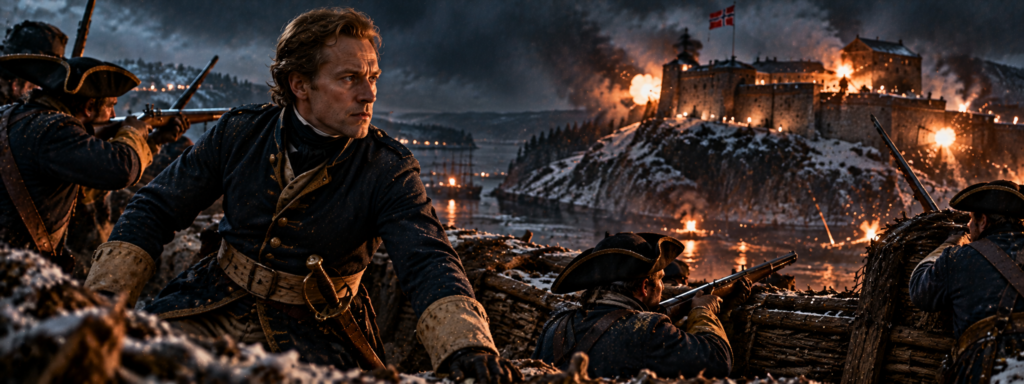
Charles XII of Sweden: The Warrior King, the Fatal Bullet, and the Assassination Mystery That Refuses to Die
The Death of Sweden’s Most Relentless King at Fredriksten in 1718, the Soldiers Who May Have Wanted Him Dead, and the Centuries-Old Mystery of the Shot That Ended an Empire
Charles XII of Sweden: The King Who Died in the Trenches
Charles XII of Sweden (17 June 1682 – 30 November 1718, Old Style; 11 December 1718, Gregorian calendar) was king of Sweden from 1697 until his death during the siege of Fredriksten Fortress in Norway. The only surviving son of King Charles XI and Ulrika Eleonora of Denmark, he inherited the Swedish throne at fourteen and spent most of his adult life fighting the Great Northern War against a coalition of European powers determined to dismantle Swedish dominance in the Baltic region. His extraordinary early victories against Denmark, Russia, and Poland-Lithuania established his reputation as one of Europe’s most formidable military commanders, but his refusal to compromise contributed to a prolonged conflict that devastated Sweden’s resources and ultimately destroyed its position as a great power. On the night of 30 November 1718, while inspecting siege works outside Fredriksten, Charles was struck in the head by a projectile and killed almost instantly. Although enemy fire from the fortress remains the conventional explanation, persistent allegations claimed that a Swedish soldier or conspirator deliberately shot him from behind his own lines. The king’s skull was examined repeatedly over the following centuries, while rival theories involving musket balls, grapeshot, and even a button supposedly fired from a gun transformed his death into one of Scandinavia’s most enduring historical mysteries.
A King Falls in the Darkness
The night was cold, the siege was dragging on, and the Swedish army was still struggling to break the defenses of Fredriksten Fortress. Beyond the earthworks, Norwegian defenders watched the approaches to their stronghold, knowing that the Swedish king had brought an invading army into their country. In the trenches below, soldiers worked beneath the constant danger of artillery and small-arms fire, pushing their positions closer to the walls. Somewhere among them was Charles XII, the thirty-six-year-old monarch who had spent nearly two decades at war and seemed incapable of abandoning a campaign once he had committed himself to it.
Charles was not watching the battle from the safety of a distant headquarters. He had moved forward to inspect the siege works, exposing himself to the same danger faced by the men digging and defending the trenches. This was entirely characteristic of a ruler who had repeatedly placed himself near the fighting throughout his military career. His officers had reason to worry about such behavior, but the king’s personal courage had become inseparable from his reputation. At Fredriksten, that courage brought him within reach of a fatal shot.
A projectile struck Charles in the head, passing through his skull and killing him almost immediately. The wound was catastrophic, and the king’s death brought a sudden end to the personal command of the campaign. The surviving accounts differ in certain details of his posture and the precise sequence in which those around him discovered what had happened. They agree on the essential fact that Charles died from a gunshot wound while exposed in the Swedish siege positions.
The immediate political consequences were enormous. Sweden had lost the monarch who had dominated its government and military strategy since the end of the seventeenth century. The invasion of Norway quickly lost its driving force, and the Swedish army began withdrawing from the campaign. At home, the king’s death opened the question of succession and created opportunities for political figures who had long resented his uncompromising rule.
But the circumstances of the fatal shot soon encouraged a more disturbing possibility. What if the bullet had not come from the Norwegian fortress at all? What if someone within the Swedish army had decided that the only way to end the king’s disastrous wars was to kill the man who refused to stop fighting? The theory transformed a battlefield death into a possible act of regicide, and it has never entirely disappeared from historical discussion.
The mystery was made more compelling by the king’s extraordinary reputation. Charles had survived years of dangerous campaigning, including battles in which Swedish soldiers suffered devastating losses. He had faced artillery, musket fire, cavalry charges, and the hardships of military life with remarkable endurance. His death from a single shot at Fredriksten seemed almost too abrupt an ending for a ruler whose entire adult life had been defined by warfare.
Yet dramatic circumstances do not necessarily imply conspiracy. Siege warfare was dangerous, and the king had deliberately placed himself in an exposed position. Norwegian defenders had every reason to fire upon the Swedish trenches, whether or not they recognized the monarch among the men below. The central historical question is therefore not whether Charles could have been assassinated, but whether the surviving evidence demonstrates that he was.
To understand why the possibility has remained so persistent, it is necessary to examine the man who died at Fredriksten, the war that consumed his kingdom, and the political interests that stood to benefit from his death.
The Boy Who Inherited an Empire
Charles was born on 17 June 1682 into a royal family that ruled one of northern Europe’s most powerful states. Sweden’s territories extended far beyond the borders of the modern kingdom, encompassing important possessions around the Baltic Sea. The Swedish monarchy had acquired much of its international position through warfare, diplomacy, and an effective military organization. By the time Charles was born, Sweden had become a major European power despite possessing a comparatively small population.
His father, Charles XI, had worked to strengthen royal authority and restore the financial and administrative foundations of the state. Through policies that increased the crown’s control over land and revenue, he reduced the independence of powerful aristocratic interests. He also developed a military system designed to provide Sweden with disciplined and relatively reliable armed forces. These achievements gave his son a formidable inheritance.
Charles’s mother, Ulrika Eleonora of Denmark, belonged to the Danish royal family, a connection that reflected the complicated relationship between the Scandinavian monarchies. Denmark and Sweden had fought repeated wars over territory and regional influence. Royal marriages could create personal ties, but they did not eliminate the strategic rivalry between the kingdoms. Charles grew up in a world where dynastic relationships and military competition were closely intertwined.
The young prince received an education appropriate to a future monarch. He studied languages, religion, military affairs, and the responsibilities of government. Hunting, riding, and physical endurance became important elements of his upbringing. These interests helped develop the personal habits that later distinguished him as a soldier-king.
Charles’s childhood was marked by early bereavement. His mother died in 1693, when he was eleven years old, and his father died in April 1697. The prince was still fourteen when he inherited the throne. His youth immediately raised questions about how Sweden would be governed during the transition.
A regency arrangement was initially established, but Charles was soon declared of age and assumed personal control of government in December 1697. The decision placed enormous authority in the hands of a teenager. Sweden’s political institutions had been shaped by his father’s strong monarchy, leaving the young king with considerable freedom of action. His character and judgment would therefore have unusually important consequences.
Foreign rulers watched the succession with interest. Sweden possessed valuable territories that neighboring powers wanted to recover or acquire. The accession of an inexperienced monarch appeared to offer an opportunity. Charles’s enemies would soon discover that they had underestimated him.
The Young King Nobody Expected to Fear
When Charles XII assumed power, many European observers regarded his youth as a weakness. He had inherited an extensive monarchy but lacked the experience of the rulers who surrounded him. His enemies believed that Sweden might be vulnerable to a coordinated attack. The assumption helped produce the coalition that launched the Great Northern War.
Denmark-Norway, Russia, and Saxony-Poland became the principal early opponents of Sweden. Their rulers had different territorial ambitions, but they shared an interest in weakening Swedish dominance around the Baltic. The coalition’s strategy depended partly upon the belief that the young king would struggle to respond effectively. Instead, Charles demonstrated remarkable energy and military determination.
His first major success came against Denmark in 1700. Swedish forces crossed to Zealand, threatening Copenhagen and placing King Frederick IV under pressure. Denmark withdrew from the war through the Peace of Travendal. The speed of the campaign established Charles as a serious military leader.
Later that year, Charles confronted a much larger Russian army besieging Narva in Swedish Estonia. The Swedish forces attacked during difficult weather conditions and achieved a stunning victory. Russian troops suffered severe losses, while the Swedish army captured prisoners and equipment. The Battle of Narva became one of the defining triumphs of Charles’s early career.
The victory was particularly impressive because Russia possessed far greater demographic resources than Sweden. Peter I, later known as Peter the Great, was attempting to transform the Russian state and military. Charles’s success temporarily humiliated Russian ambitions in the Baltic. It also encouraged the Swedish king to believe that bold offensive warfare could overcome numerical disadvantages.
The young monarch’s reputation expanded rapidly. He appeared fearless, disciplined, and unusually comfortable with the hardships of campaigning. He shared many of the conditions endured by his soldiers and cultivated an image of personal austerity. His willingness to accept danger strengthened the loyalty of men who admired courage in their commander.
Yet the early victories also contained the seeds of later disaster. Charles developed confidence in military solutions and showed little inclination to accept settlements that he regarded as dishonorable or strategically inadequate. He believed that Sweden could defeat its enemies through determination and offensive action. The longer the war continued, the more costly that conviction became.
The Great Northern War: A Conflict That Consumed a Kingdom
The Great Northern War began in 1700 and continued until 1721, three years after Charles’s death. It involved shifting alliances, campaigns across vast distances, and battles that transformed the political balance of northern Europe. For Sweden, the conflict became an exhausting struggle to defend an empire acquired through earlier generations of warfare. For Charles, it became the central purpose of his reign.
The war was not simply a contest between two monarchs. It involved the ambitions of Russia, Denmark-Norway, Saxony, Poland-Lithuania, and other powers whose interests changed over time. The Baltic region was economically and strategically valuable, providing access to trade routes, ports, and important territories. Control of these areas influenced the wider European balance of power.
Charles initially concentrated upon defeating his enemies separately. After forcing Denmark out of the conflict and defeating Russia at Narva, he turned his attention toward the Polish-Lithuanian Commonwealth and Saxony. His campaigns brought military successes but consumed years that Russia used to rebuild its forces. Peter the Great reorganized his army and strengthened Russia’s military position.
The Swedish king’s strategy reflected his determination to secure decisive political results. He did not merely seek battlefield victories but attempted to alter the governments and alliances of his opponents. In Poland-Lithuania, he supported the elevation of Stanisław Leszczyński as king against Augustus II. The intervention demonstrated the extent of Charles’s ambitions.
The campaigns also imposed severe burdens upon soldiers and civilians. Armies required food, horses, equipment, and money, and prolonged operations devastated communities. Swedish troops endured disease, exposure, and the dangers of battle. The kingdom’s population was too small to replace losses indefinitely.
At home, the war demanded extraordinary financial and administrative effort. The crown mobilized resources through taxation, recruitment, and increasingly difficult economic measures. Families lost men to military service, while agricultural communities struggled with the consequences. The Swedish state remained remarkably resilient, but the costs accumulated.
Charles’s personal leadership helped sustain the war effort. He was admired for his endurance and willingness to share hardship. Yet the same determination that inspired his soldiers could also make him unwilling to reconsider failing strategies. His commitment to victory increasingly became a burden upon the kingdom he was trying to defend.
By the time he died in 1718, the war had lasted eighteen years. Sweden had lost much of the strategic advantage it possessed at the beginning of the century. Russia had emerged as a major Baltic power, and Sweden’s resources were severely strained. The king’s death would accelerate the political changes that the conflict had already made increasingly difficult to avoid.
The Road to Poltava
Charles’s greatest military disaster developed from his decision to invade Russia. After years of campaigning in Poland and Saxony, he turned eastward in 1707 with the intention of confronting Peter the Great more directly. The Swedish army remained formidable, but the campaign would expose it to enormous logistical difficulties. Distance, weather, supply shortages, and Russian defensive strategy gradually weakened the invading force.
Peter avoided allowing Charles to dictate the terms of battle. Russian forces withdrew, destroyed supplies, and forced the Swedes to operate across increasingly difficult territory. The campaign became a struggle against geography and logistics as much as against an enemy army. Charles’s confidence in offensive action could not eliminate the practical demands of feeding and equipping his soldiers.
The Swedish army eventually moved toward Ukraine, where Charles hoped to obtain support from the Cossack leader Ivan Mazepa. Mazepa’s alliance offered the possibility of local assistance and a new strategic position. Yet Russian operations disrupted these expectations. The resources Charles hoped to secure proved insufficient.
The winter of 1708–1709 was exceptionally severe. Swedish soldiers suffered from exposure, shortages, and disease. Horses died, equipment deteriorated, and the army’s strength declined. The conditions placed enormous strain upon a force already operating far from its principal bases.
Charles himself remained determined to continue. His reputation for endurance was reinforced by his willingness to share the hardships of campaigning. Yet the strategic situation had deteriorated dramatically. The army that approached Poltava in 1709 was no longer the confident force that had begun the invasion.
Shortly before the decisive battle, Charles was wounded in the foot. The injury prevented him from exercising his usual direct battlefield command. His senior officers had to manage operations under difficult circumstances. The wound became another complication in a campaign already burdened by severe logistical problems.
The Battle of Poltava, fought on 28 June 1709 according to the Gregorian calendar, ended in a crushing Swedish defeat. Russian forces demonstrated the effectiveness of Peter’s military reforms, while the Swedish army suffered catastrophic losses. Many soldiers were killed, wounded, or captured. The defeat destroyed the main field army upon which Charles had relied.
Poltava transformed the Great Northern War. Sweden lost the initiative, while Russia emerged with greatly increased confidence and power. Charles escaped southward into Ottoman territory, but his army’s destruction could not be reversed. The king who had once seemed invincible had suffered a defeat from which his empire would never fully recover.
The King Who Refused to Return Home
After Poltava, Charles fled into Ottoman territory and eventually established himself near Bender, in what is now Moldova. His presence created a complicated diplomatic situation for the Ottoman Empire. Charles hoped to persuade the Ottoman government to support renewed war against Russia. He remained determined to recover Sweden’s position rather than accept the consequences of defeat.
The Swedish king’s stay lasted for several years. His prolonged absence from Sweden became increasingly extraordinary as the kingdom faced military and financial difficulties. Government continued through institutions and officials at home, but the monarch remained far away. His refusal to return reflected both diplomatic calculations and his unwillingness to abandon the struggle.
Charles’s efforts contributed to Ottoman-Russian tensions, although Ottoman policy was shaped by broader strategic interests. The Ottoman Empire fought Russia in 1710–1711, but the resulting settlement did not restore Sweden’s lost position. Charles remained dissatisfied with the outcome. His ambitions exceeded what Ottoman leaders were willing to pursue.
His relationship with the Ottoman authorities eventually deteriorated. The Swedish king’s continued presence became inconvenient, and attempts were made to persuade him to leave. In 1713, a confrontation at Bender resulted in the extraordinary incident known as the Kalabalik. Charles and a small group of followers resisted Ottoman forces before being overpowered.
The episode reinforced his reputation for stubborn courage. Even when surrounded and facing overwhelming odds, he resisted rather than submit quietly. Admirers saw the incident as proof of his extraordinary spirit. Critics could regard it as another example of a ruler whose determination had become recklessness.
Charles eventually returned to Swedish-controlled territory in 1714 after a remarkable journey across Europe. His return came after years in which the strategic position of Sweden had deteriorated. The kingdom faced enemies on several fronts, and its finances were increasingly strained. Yet the king did not return with a plan to end the war through immediate compromise.
Instead, he resumed direct involvement in military and political affairs. His determination to continue fighting remained intact. The years of exile had not changed his conviction that Sweden’s fortunes could be restored through renewed action. This persistence would eventually lead him to Norway and the fatal trenches of Fredriksten.
The Cost of a King’s Refusal to Surrender
Charles’s determination was one of his most admired qualities, but it also imposed immense costs upon Sweden. The kingdom had been at war for most of his reign, and its resources were increasingly exhausted. Military recruitment removed men from farms and communities, while taxation and emergency financial measures placed heavy burdens upon the population. The war had become a national struggle for survival.
The Swedish military system had been designed to support sustained operations, but the scale and duration of the conflict exceeded its original expectations. Repeated campaigns consumed experienced soldiers and officers. Replacements were difficult to obtain, especially as casualties accumulated. The army’s resilience could not conceal the demographic and economic damage.
The loss of Baltic territories also weakened Sweden’s strategic position. Russia captured important possessions and established itself more firmly along the Baltic coast. Peter the Great’s construction of Saint Petersburg symbolized the transformation of regional power. Sweden’s former dominance was being challenged by a state with far greater resources.
Charles remained unwilling to accept a settlement that would confirm the loss of Sweden’s imperial position. His determination reflected genuine strategic concerns, because surrendering territory could weaken the kingdom’s future security. Yet continued war also risked further destruction. The distinction between defending national interests and prolonging an unwinnable conflict became increasingly difficult.
The king’s personal habits reinforced the contrast between himself and his suffering subjects. He was famously austere and showed little interest in luxurious court life. His willingness to endure hardship distinguished him from rulers who demanded comfort while their soldiers suffered. Yet personal austerity did not reduce the burdens imposed by his military policies.
Political dissatisfaction grew among those who believed that Sweden needed peace. The king’s authority remained formidable, but his decisions affected powerful officials, military commanders, merchants, and ordinary families. Some feared that continued warfare would destroy the state. Others remained loyal to Charles and believed that compromise would dishonor Sweden’s sacrifices.
These divisions became important after his death. The question of whether Charles had been deliberately killed cannot be separated from the political frustrations created by the war. A ruler whose policies endangered powerful interests could acquire enemies within his own country. Yet dissatisfaction alone does not prove that anyone organized an assassination.
The circumstances nevertheless created a plausible motive for conspiracy. If Charles refused to end the war, some might conclude that peace required a change of ruler. His death would immediately remove the central figure sustaining the conflict. This possibility became one of the foundations of the assassination theories that developed after Fredriksten.
The Norwegian Campaign of 1718
By 1718, Charles had turned his attention toward Norway, then united with Denmark under the Danish crown. His strategy involved attacking Denmark-Norway while Sweden’s broader position remained precarious. A successful campaign might weaken an important enemy and improve Sweden’s bargaining position. The king hoped that military pressure could create opportunities unavailable through diplomacy alone.
The campaign involved operations against Norwegian defenses, including Fredriksten Fortress near Fredrikshald, now Halden. The fortress occupied a commanding position and protected an important approach into Norway. Capturing it would strengthen the Swedish position and potentially open further opportunities. Charles therefore committed substantial resources to the siege.
Swedish forces advanced and began constructing siege works around the fortress. The operation required careful engineering, artillery preparation, and the movement of troops through difficult terrain. The defenders possessed strong positions and could direct fire upon the approaching trenches. Progress was dangerous and laborious.
Charles took a personal interest in the siege. He had long preferred direct observation of military operations and frequently exposed himself to danger. At Fredriksten, he moved among the works rather than remaining permanently in a protected command position. His behavior reflected the same habits that had distinguished his earlier campaigns.
The king’s presence could inspire soldiers, but it also created obvious risks. A monarch inspecting forward positions might be struck by enemy fire just as any ordinary soldier could be. His officers understood the danger, particularly during a siege where defenders watched the trenches closely. Charles nevertheless continued to expose himself.
The siege also occurred at a moment of political uncertainty. Sweden’s resources were exhausted, and the outcome of the campaign remained uncertain. The king’s determination to continue fighting was not universally welcomed. His death would therefore have consequences extending far beyond the immediate military operation.
The Norwegian defenders had strong reasons to resist. Fredriksten protected their territory from invasion, and the Swedish army represented a serious threat. Fire from the fortress was intended to prevent the besiegers from advancing. The death of a Swedish officer or soldier under such circumstances would not have been unusual.
What made the fatal shot extraordinary was the identity of the victim. Charles XII was not merely another man in the trenches. He was the ruler whose decisions had shaped nearly two decades of European warfare. When he fell, the entire strategic and political direction of Sweden changed.
Fredriksten Fortress: The Walls That Defied a King
Fredriksten Fortress stood above Fredrikshald, commanding the surrounding approaches and providing a formidable defensive position. Its fortifications had been developed to protect the Norwegian frontier against Swedish attack. The stronghold’s elevation and defensive works made it difficult for an invading army to capture. Charles understood that reducing the fortress would require a sustained siege.
The Swedish army constructed trenches and batteries designed to bring its forces closer to the defenses. Siege warfare depended upon engineering as much as direct combat. Soldiers had to dig, carry materials, establish firing positions, and protect themselves from enemy artillery. Every advance exposed them to danger.
The defenders responded with cannon and small-arms fire. Their objective was to disrupt Swedish operations and prevent the attackers from approaching the walls. Even when firing at positions rather than identifiable individuals, their weapons could inflict casualties. The trenches were therefore dangerous places for anyone who entered them.
Charles’s presence in the forward works was consistent with his military style. He wanted to inspect progress personally and understand the condition of the siege. Such involvement could improve his knowledge of operations, but it also exposed him to the enemy. The king had survived similar risks before, which may have reinforced his willingness to accept them.
The night of 30 November 1718 became the decisive moment. Charles was near the forward Swedish positions when the fatal projectile struck his head. The exact distance and direction of the shot have been debated extensively. The available evidence establishes the location and nature of his death but leaves important details uncertain.
The defenders at Fredriksten could not have known that the death of the Swedish king would transform the war. Their immediate concern was protecting the fortress. Yet Charles’s death removed the personal force driving the invasion. The siege soon lost its purpose.
Fredriksten therefore occupies a unique place in Swedish and Norwegian historical memory. For Norway, it represents a successful defense against a powerful invading monarch. For Sweden, it marks the sudden death of a king whose military career had dominated a generation. For historians of political assassination, it remains the setting of an unresolved question about the origin of a fatal shot.
The Night of 30 November 1718
On the night Charles died, the Swedish siege works were active despite the darkness and cold. Soldiers continued the dangerous labor required to advance toward Fredriksten. The king moved forward to inspect the operations, accompanied by officers and attendants. His presence placed him near positions exposed to fire from the fortress.
Charles was observed in or near a trench when the fatal projectile struck him. Accounts describe him looking over the works, with his head exposed above the protective earthwork. The wound passed through his skull and caused immediate death. The suddenness of the event left little opportunity for medical intervention.
The surviving descriptions vary in detail. Some emphasize the king’s posture, while others describe the reactions of nearby officers. The direction of the projectile has been interpreted differently in later investigations. These variations have contributed to the persistence of assassination theories.
The immediate response was shaped by the extraordinary significance of the death. The army had lost its commander and sovereign during an active siege. Officers had to consider the danger of disorder and the consequences of spreading the news. The circumstances encouraged secrecy and caution.
Charles’s body was removed from the forward position. The army’s leadership faced the difficult task of managing the campaign without the king who had directed it. The death undermined the political purpose of continuing the operation. Withdrawal became the practical outcome.
The fatal wound was severe and unmistakable. Later examinations of the skull confirmed that a projectile had passed through the head. The damage provided important evidence for attempts to reconstruct the shot. Yet the wound alone could not identify the person who fired it.
The mystery began with the question of direction. If the projectile came from Fredriksten, Charles had died from enemy fire while exposing himself to danger. If it came from within the Swedish positions, the death might have been an assassination. The distinction would become the subject of centuries of argument.
For the soldiers present, however, the immediate reality was simpler and more devastating. Their king was dead, and the campaign had lost its central figure. The man who had survived Narva, Poltava, Ottoman captivity, and years of warfare had fallen to a single shot. His death marked the end of an era.
The Fatal Wound: What the Skull Reveals
Charles XII’s skull has played an unusually important role in the investigation of his death. The fatal projectile created a wound that could be examined long after the king’s burial. Later investigators attempted to determine the direction of the shot by studying the damage to the bone. Their findings became central to arguments about assassination.
The wound involved the passage of a projectile through the head, producing damage on both sides of the skull. Determining which opening represented entry and which represented exit is essential to reconstructing the direction of fire. In modern forensic analysis, features of bone damage can help distinguish entrance and exit wounds. Yet historical remains present additional difficulties because of preservation, earlier handling, and incomplete contextual information.
The skull was examined on several occasions, including investigations associated with the openings of Charles’s tomb. Researchers attempted to use the physical evidence to determine whether the projectile came from the fortress or from the Swedish side. Different interpretations emerged. The disagreement contributed to the enduring controversy.
One important complication is that the direction of the wound cannot automatically identify the shooter’s nationality. A projectile traveling from a particular angle might be consistent with more than one firing position, depending upon the king’s posture and the layout of the trenches. The precise orientation of his head at the moment of impact is not known with complete certainty. Small uncertainties in reconstruction can produce large differences in conclusions.
The type of projectile has also been debated. Some investigators favored a musket ball, while others considered artillery ammunition such as grapeshot or canister shot. The distinction matters because the likely firing positions and trajectories would differ. Yet the original projectile was not securely preserved in a way that resolves the matter.
Later examinations have strengthened some interpretations while challenging others. The physical evidence confirms a catastrophic gunshot wound but does not conclusively establish a Swedish assassin. Nor does it eliminate every possibility of friendly fire or deliberate shooting from within the Swedish lines. The skull remains important evidence, but it is not a complete record of the event.
The limitations of the forensic evidence are often overlooked in popular retellings. A wound can reveal the passage of a projectile, but it cannot disclose motive. Even if the direction were established beyond doubt, historians would still need evidence identifying the shooter and demonstrating intention. The leap from trajectory to conspiracy is therefore larger than it first appears.
The skull has become a symbol of the mystery precisely because it appears to promise an answer. Its damaged bone offers something tangible in a case otherwise dominated by rumors and conflicting accounts. Yet every examination has been constrained by the same fundamental problem. The fatal wound survives, while the circumstances that produced it remain partly hidden.
Enemy Fire or Murder From Within?
The conventional explanation for Charles XII’s death is that he was struck by a projectile fired from Fredriksten Fortress. This interpretation is consistent with the circumstances of an active siege. The king was exposed in forward Swedish positions, and Norwegian defenders were firing upon the besiegers. A fatal shot from the fortress would therefore require no extraordinary conspiracy.
The assassination theory proposes that the projectile came from within the Swedish lines. According to this interpretation, someone who wanted the king removed took advantage of his exposed position and the confusion of siege warfare. The darkness and noise could have concealed the origin of the shot. The death might then have been attributed to enemy fire.
The theory gained strength from the political circumstances. Charles had prolonged the war despite Sweden’s worsening position, and his death created opportunities for those who favored peace or political change. Powerful individuals had reasons to resent his policies. Yet the existence of possible motives does not establish that a conspiracy occurred.
A successful assassination would have required access to the king’s vicinity or knowledge of his movements. The shooter would also have needed an opportunity to fire without attracting suspicion. Such circumstances were possible during a siege, but they are not documented in a way that identifies a perpetrator. No surviving evidence provides a reliable eyewitness account of a Swedish soldier deliberately shooting Charles.
The direction of the wound has been used to support competing interpretations. Some reconstructions have argued that the projectile’s path was more consistent with a shot from Swedish positions. Others have found enemy fire entirely plausible. The uncertainty surrounding the king’s posture and the precise firing positions limits the strength of these conclusions.
The assassination theory also faces the problem of motive among ordinary soldiers. Many Swedish troops suffered from exhaustion and hardship, but Charles retained considerable personal prestige. His courage and willingness to share military danger inspired loyalty. A soldier’s dissatisfaction with the war would not automatically translate into willingness to murder the king.
Nevertheless, the possibility cannot be dismissed solely because Charles was admired. Political assassination has often occurred within institutions where loyalty and resentment coexist. A ruler can inspire devotion among some followers while provoking desperation among others. The question is whether the evidence demonstrates that such desperation produced a fatal act.
The surviving record does not establish that it did. The conventional explanation of enemy fire remains historically plausible and is generally preferred over an unproven conspiracy. Yet the unusual circumstances and subsequent political changes have ensured that the assassination theory continues to attract attention. Charles’s death remains a case in which uncertainty has proved remarkably durable.
The Swedish Soldier Who May Never Have Existed
Popular accounts of Charles XII’s death sometimes refer to an unnamed Swedish soldier who supposedly fired the fatal shot. The image is compelling because it transforms the king’s death into an act of betrayal by one of his own men. A soldier exhausted by years of war might have decided that the monarch’s death was the only path to peace. The theory fits the atmosphere of desperation surrounding Sweden in 1718.
Yet no securely established contemporary evidence identifies such a soldier as the killer. The claim is a hypothesis rather than a documented fact. Later stories have supplied possible perpetrators, motives, and circumstances, but these details vary. The absence of a reliable identification remains a major weakness in the assassination case.
The theory also depends upon assumptions about the soldier’s opportunity. Charles was moving among active siege positions, but his precise location and posture at the moment of death are not fully reconstructed. A would-be assassin would have needed to fire from a position consistent with the wound. The evidence does not demonstrate that a particular Swedish soldier occupied such a position.
The political motive is more plausible in general terms. Sweden had endured eighteen years of war, and the king’s determination to continue fighting created enormous hardship. Some individuals may have believed that his death would save the kingdom. Yet motive without evidence of action cannot establish guilt.
The story also reflects a recurring pattern in accounts of controversial royal deaths. When a powerful ruler dies suddenly, later generations often search for a hidden hand behind the event. A simple battlefield casualty can appear unsatisfactory when the political consequences are enormous. The idea of assassination provides a deliberate cause for a transformative historical moment.
Charles’s death certainly benefited those who wanted a change in policy. The Norwegian campaign ended, and Sweden moved toward a different political settlement. But these consequences do not prove that anyone planned the death. Historical events can produce dramatic benefits for individuals who did not cause them.
The unnamed Swedish soldier therefore remains a figure of speculation. He may represent a genuine possibility, but the surviving evidence does not establish his existence as an assassin. Treating him as a known perpetrator would transform an unresolved theory into a false certainty. The mystery is more accurately described as a disputed battlefield death than a proven act of regicide.
The Button That Became a Bullet
Among the strangest stories surrounding Charles XII’s death is the claim that he was killed by a button fired from a gun. The theory developed within the wider tradition of assassination allegations and acquired a distinctive place in Swedish folklore. According to versions of the story, a button associated with a Swedish soldier was used as an improvised projectile. The detail gave the supposed murder an almost supernatural quality.
Some versions connected the button with beliefs about the king’s unusual protection from ordinary bullets. Charles’s survival through years of dangerous campaigning encouraged stories that he possessed extraordinary luck or even supernatural invulnerability. Within this tradition, an ordinary bullet might supposedly fail to kill him. A specially chosen object could therefore be imagined as the instrument that finally ended his life.
Such beliefs belong to folklore rather than reliable military history. Charles was not immune to gunfire, and his earlier survival required no supernatural explanation. The button story reflects the tendency of popular memory to transform remarkable individuals into legendary figures. His death became an event demanding an equally remarkable weapon.
The theory attracted renewed attention when an object described as a possible bullet-button was associated with the case. Investigations attempted to determine whether such an object could have been used as a projectile and whether it had any meaningful connection to the king’s death. The results did not establish that a button killed Charles. The evidence remained insufficient to identify it as the fatal projectile.
The practical difficulties are considerable. A button fired from a weapon would behave differently from a purpose-made musket ball, depending upon its material, shape, and the firearm used. Its ability to produce the observed wound would require careful examination. Even if physically possible, that would not establish that the event occurred.
The button theory also lacks a reliable chain of evidence connecting a particular object to the fatal shot. Later discoveries and traditions cannot substitute for documentation from 1718. The passage of centuries creates opportunities for misidentification and embellishment. An object associated with a legend may acquire significance simply because the story is famous.
The fascination with the button reveals how deeply Charles’s death entered Swedish cultural memory. The king’s military reputation encouraged the belief that an ordinary death was somehow inadequate. A secret assassin and an unusual projectile offered a more dramatic explanation. The legend transformed a battlefield casualty into a tale of deliberate betrayal.
For historical purposes, however, the button remains an unproven element of the mystery. It cannot be treated as the established weapon that killed Charles XII. The fatal projectile’s identity remains uncertain. The story is valuable as folklore, but it does not resolve the assassination question.
The Men Who Benefited From the King’s Death
Charles XII’s death created immediate political opportunities for individuals who had been constrained by his personal authority. The king had dominated Swedish military strategy and resisted settlements that might have ended the war earlier. His disappearance removed the central obstacle to a change in policy. It also opened the succession and altered the balance of power within the royal family.
One of the most important figures in the political environment was Georg Heinrich von Görtz, a minister closely associated with Charles’s financial and diplomatic policies. Görtz had become deeply unpopular because of measures intended to sustain the war effort. His influence depended heavily upon the king’s support. Charles’s death therefore placed him in an extremely vulnerable position.
Görtz was arrested shortly after the king’s death and subsequently executed in 1719. His downfall demonstrated how rapidly political fortunes could change once Charles was gone. The minister became a target for anger over the financial and administrative burdens of the war. His execution reflected the new political order’s desire to distance itself from the previous regime.
The succession also created opportunities for Charles’s sister Ulrika Eleonora and her husband, Frederick of Hesse-Kassel. Charles had never married and left no legitimate children, making the succession politically sensitive. Ulrika Eleonora eventually became queen, while Frederick later succeeded her as king. Their rise occurred within a broader transformation of Swedish government.
Some assassination theories have implicated individuals associated with the succession struggle. The argument is that removing Charles would allow rival political interests to gain power. Such speculation reflects the real benefits that followed his death. Yet the surviving evidence does not establish that these figures organized the fatal shooting.
The political consequences also included a reduction in royal absolutism. Sweden moved toward a constitutional order in which the estates exercised greater authority. The period that followed became known as the Age of Liberty. Charles’s death therefore marked a turning point not only in foreign policy but also in the structure of the monarchy.
These developments help explain why conspiracy theories persisted. The death of the king was followed by changes that powerful people had reason to desire. The coincidence of motive and benefit appears suspicious when viewed retrospectively. Yet political change after a ruler’s death is not itself evidence of assassination.
The most responsible conclusion is that Charles’s death benefited several political interests without proving that any of them caused it. The distinction is essential because the accusation of regicide requires more than identifying who gained power. It requires evidence connecting intention to action. In the case of Charles XII, that connection remains unproven.
Georg Heinrich von Görtz and the Politics of Desperation
Georg Heinrich von Görtz became one of the most controversial figures associated with the final years of Charles XII’s reign. A skilled administrator and diplomat, he worked to sustain Sweden’s war effort through financial measures and negotiations. His policies were unpopular among many subjects who already suffered from the prolonged conflict. He became a symbol of the burdens imposed by the king’s determination to continue fighting.
Görtz’s position depended upon Charles’s confidence. The king valued his ability to devise financial and diplomatic solutions under extremely difficult circumstances. Yet the measures required to support the war created resentment. Emergency currency policies and other interventions contributed to public dissatisfaction.
The minister’s influence also made him vulnerable to political enemies. Those who opposed Charles’s policies could direct their anger toward Görtz as the man responsible for implementing them. His foreign background further complicated his reputation. He became an obvious target when the political situation changed.
Charles’s death destroyed the protection that had sustained Görtz’s authority. He was arrested and placed on trial, eventually being executed in February 1719. The proceedings were shaped by the intense political hostility surrounding the end of the king’s reign. His downfall demonstrated the desire of the new government to repudiate aspects of the previous administration.
Görtz’s fate also illustrates why Charles’s death had such dramatic consequences. The king had concentrated authority around himself and trusted advisers. When he died suddenly, those arrangements collapsed. Political opponents moved quickly to reshape the government.
The minister’s execution has sometimes been included in discussions of the assassination mystery because it shows the intensity of political resentment. Yet Görtz was not a plausible beneficiary of Charles’s death. His power depended upon the king, and he suffered immediate ruin after the fatal shot. His fate therefore complicates simplistic claims that everyone around Charles wanted him dead.
The broader political environment was nevertheless unstable. Financial hardship, military exhaustion, and succession uncertainty created opportunities for conflict. Some individuals stood to gain from the king’s death, while others faced destruction. The assassination theories emerged within this complicated network of interests.
Görtz’s story serves as a reminder that political motive cannot be assigned indiscriminately. The consequences of Charles’s death were different for different individuals. Any serious assassination theory must identify a specific suspect and demonstrate a credible connection to the shooting. General dissatisfaction with the war is not enough.
Ulrika Eleonora and the Crown Left Behind
Charles XII’s death created a succession crisis because he had never married and left no legitimate children. His sister Ulrika Eleonora became a central figure in the struggle to determine the future of the monarchy. She possessed a strong dynastic claim, but the political settlement required negotiation with the Swedish estates. The succession therefore became an opportunity to redefine royal authority.
Ulrika Eleonora sought recognition as queen and eventually secured the crown in 1719. Her accession occurred within a political environment deeply affected by the war and the desire to limit absolutism. The estates insisted upon constitutional arrangements that reduced the monarch’s independent power. The result marked a major departure from the system under which Charles had ruled.
Her husband, Frederick of Hesse-Kassel, also played an important role in the political transition. He had military and dynastic interests that made him influential within the new order. In 1720, Ulrika Eleonora abdicated in his favor, and he became King Frederick I of Sweden. The succession demonstrated how quickly the monarchy’s structure changed after Charles’s death.
These developments have encouraged speculation about possible involvement in the king’s death. Those who benefited from the succession could be imagined as having motives to remove him. Yet the surviving evidence does not establish that Ulrika Eleonora or Frederick organized an assassination. Their political advancement is a consequence of Charles’s death, not proof of responsibility for it.
The transformation of the monarchy also reflected broader dissatisfaction with absolutist government. Charles had exercised extensive personal authority, particularly in military affairs. The estates sought to prevent future rulers from governing with similar independence. His death created the political opening for these reforms.
The Age of Liberty that followed became an important period in Swedish constitutional history. Power shifted toward parliamentary institutions, and the monarchy became more constrained. The changes were not simply the product of one man’s death, but that death made them possible. Charles’s absence removed the central figure who might have resisted them.
The succession therefore forms an essential part of the assassination mystery. It demonstrates the political stakes surrounding the king’s death. It also explains why later generations searched for conspirators among those who gained influence afterward. Yet the historical record remains insufficient to turn these suspicions into established accusations.
Charles’s death was transformative whether or not it was murder. It ended the reign of a ruler who had dominated Sweden for more than twenty years. It opened the way for a new constitutional settlement and a different approach to the war. The mystery of the fatal shot became inseparable from the political revolution that followed.
The Retreat From Norway
The death of Charles XII had immediate consequences for the Swedish campaign in Norway. The army had lost its commander and the monarch whose personal determination sustained the invasion. Continuing the siege of Fredriksten without him became politically and militarily difficult. The Swedish forces began withdrawing from the operation.
The retreat marked the failure of Charles’s final military venture. He had hoped that pressure upon Denmark-Norway would improve Sweden’s strategic position. Instead, the campaign ended with his death and the abandonment of the siege. The fortress remained in Norwegian hands.
The withdrawal also exposed the Swedish army to severe hardship. Winter conditions made movement difficult, and troops had to navigate challenging terrain. The broader Norwegian campaign included forces operating in different regions, complicating coordination. The king’s death disrupted the command structure at a critical moment.
One of the most tragic consequences occurred during the retreat of General Carl Gustaf Armfeldt’s army from central Norway. In the winter of 1718–1719, thousands of Swedish and Finnish soldiers suffered catastrophic losses while crossing the mountains toward Sweden. Severe weather, exposure, and exhaustion killed large numbers of men. The disaster became one of the most terrible episodes associated with the final Norwegian campaign.
The losses demonstrated the human cost of Charles’s military ambitions. Soldiers who had survived enemy action perished in the mountains while attempting to return home. Their deaths occurred after the king himself had fallen. The war continued to claim lives even as the political purpose of the campaign disappeared.
For Sweden, the retreat symbolized the end of an era of aggressive military expansion. The kingdom had spent generations fighting to establish and defend its Baltic empire. Charles’s final campaign represented one last attempt to reverse its declining position. His death brought that effort to an abrupt conclusion.
The Norwegian defenders had achieved their immediate objective. Fredriksten remained secure, and the Swedish invasion failed. The fortress became associated with the death of one of Europe’s most famous warrior kings. Its survival was a major moment in Norwegian military history.
The retreat also strengthened the perception that Charles’s death had changed everything. The army withdrew, political authority shifted, and Sweden began moving toward peace. Such dramatic consequences encouraged the belief that someone might have deliberately engineered the fatal shot. Yet the retreat itself was a natural response to the loss of the king and does not establish assassination.
The Funeral of a Warrior King
Charles XII’s body was eventually returned to Sweden, where preparations were made for his burial. The death of a monarch required ceremonies that acknowledged both his royal dignity and the political significance of the event. Charles had spent much of his reign away from Stockholm, leading armies across Europe. His return in death contrasted sharply with the restless military life he had chosen.
He was buried in Riddarholmen Church in Stockholm, the traditional burial place of Swedish monarchs. The church became the final resting place of a ruler whose career had been dominated by war. His tomb preserved the memory of his royal status even as the political system he had represented began to change. The burial marked the formal end of his personal reign.
The funeral also occurred within an atmosphere of uncertainty. The succession was being contested and negotiated, while the kingdom faced military and financial difficulties. Charles’s death had not immediately brought peace. His successors inherited the consequences of the war.
The king’s reputation remained deeply divided. Admirers celebrated his courage, discipline, and extraordinary military achievements. Critics emphasized his stubbornness and the destruction caused by his refusal to compromise. Both interpretations became part of his posthumous legacy.
The circumstances of his death added another layer to the debate. A king killed by enemy fire could be remembered as a warrior who died at the front. A king assassinated by his own soldier would become the victim of betrayal. The distinction carried enormous emotional and political significance.
The tomb itself eventually became part of the investigation. Later generations opened it to examine the remains and study the fatal wound. The dead king’s skull became evidence in a controversy that outlived everyone who had witnessed the siege. His body was repeatedly drawn into attempts to settle the question of assassination.
The burial therefore did not end the story of Charles XII. His death continued to shape political memory, historical writing, and scientific inquiry. The monarch who had spent his life in motion became the subject of a mystery centered upon the stillness of his remains. His final wound remained a question that later generations could not resist examining.
The First Suspicions of Assassination
Suspicion surrounding Charles XII’s death developed within a political environment already marked by conflict and exhaustion. The king’s sudden disappearance benefited those who wanted an end to the war or a change in government. His death occurred at night, in a dangerous and confusing military setting. These circumstances created opportunities for speculation.
The earliest accounts did not establish a coherent assassination case. Reports differed in details of the fatal shot, and later interpretations sometimes relied upon incomplete or contradictory testimony. The absence of a securely identified projectile further complicated the matter. Historians must therefore distinguish contemporary uncertainty from later claims of certainty.
The idea that the king had been shot from within his own lines became one of the most persistent alternatives to enemy fire. Supporters of the theory argued that the direction of the wound or the position of the king made a Swedish shooter plausible. Others emphasized the political motives of those who opposed his policies. The arguments often combined physical reconstruction with speculation about motive.
The assassination theory also benefited from the dramatic political transformation after Charles’s death. The monarchy’s authority was reduced, the succession changed, and Sweden moved toward peace. These developments made the death appear convenient for powerful interests. Yet convenience is not evidence of causation.
The lack of a definitive eyewitness account identifying the shooter remains central. No reliable surviving testimony establishes that a particular Swedish soldier fired deliberately at Charles. The theory therefore depends upon inference rather than direct proof. The distinction limits the confidence with which it can be presented.
The conventional explanation remains straightforward. Charles exposed his head while inspecting trenches within range of enemy weapons. A projectile from the fortress struck him and caused immediate death. Such an event was entirely possible during an active siege.
Nevertheless, the mystery survived because the evidence did not eliminate every alternative. The physical wound, the uncertain trajectory, and the political circumstances left room for debate. Later generations continued to revisit the case. The question became part of the king’s legend.
The persistence of suspicion does not make assassination certain. It demonstrates how difficult it can be to reconstruct a single fatal moment amid warfare. Charles’s death occurred in circumstances where the origin of a projectile could be uncertain even to those nearby. Centuries later, the limitations are greater still.
Opening the Royal Tomb
The examination of Charles XII’s remains became one of the most unusual features of the historical investigation. His tomb was opened on several occasions, including in 1746, 1859, and 1917. These examinations reflected the continuing interest in the circumstances of his death. Investigators hoped that the skull would reveal the direction and nature of the fatal shot.
The early examinations occurred before the development of modern forensic methods. Observers could inspect the wound and record its appearance, but their ability to reconstruct the projectile’s path was limited. Interpretations depended upon anatomical knowledge and assumptions about the king’s position. Different conclusions could emerge from the same physical evidence.
The 1917 examination attracted particular attention because it involved more systematic documentation. Researchers studied the skull and attempted to assess the entrance and exit wounds. Their findings contributed to renewed debate about the direction of fire. Yet the examination did not produce universal agreement.
The problem was not simply a lack of scientific effort. The physical evidence had been altered by the original injury, burial, and previous handling. The precise position of Charles’s head at the moment of impact remained uncertain. Without that information, translating the wound’s path into a firing position was difficult.
The examinations also could not establish motive. Even a convincing reconstruction of trajectory would not identify a conspirator unless supported by additional evidence. The skull could indicate the direction of a projectile, but it could not reveal whether the shooter intended to kill the king. That distinction remained beyond the reach of anatomy alone.
The repeated openings of the tomb reveal the extraordinary hold of the mystery upon Swedish historical imagination. Few monarchs have had their remains examined so persistently in an effort to resolve a single battlefield death. The desire for certainty was understandable because the answer could transform the king’s legacy. Yet each investigation encountered the limitations of the surviving evidence.
The tomb became a meeting point between history, medicine, and national memory. Scientists examined bone, historians studied documents, and the public followed the controversy. The king’s death remained politically and emotionally significant long after the Swedish Empire had disappeared. His remains were treated as the final witnesses to a disputed event.
Despite these efforts, the central question survived. The examinations confirmed the catastrophic head wound but did not establish a proven assassination. The evidence remained open to competing interpretations. Charles XII continued to be remembered as a king whose death was certain but whose killer was not.
The Forensic Problem: A Shot Without a Shooter
The greatest difficulty in resolving Charles XII’s death is the separation between physical evidence and historical context. The skull records the passage of a projectile, but it does not preserve the precise position of the king’s body or the location of the weapon. The surrounding battlefield has changed over centuries. Contemporary descriptions provide useful information but are not complete enough to reconstruct every detail.
Determining the direction of fire requires several assumptions. Investigators must consider the orientation of the skull, the king’s posture, the height of the trench, and the possible firing positions. Small differences in these variables can change the apparent trajectory. The uncertainty makes definitive conclusions difficult.
The projectile’s identity is another unresolved issue. Musket balls and artillery ammunition could produce different wound characteristics, but the surviving evidence does not securely identify the fatal object. Later theories have proposed various possibilities. None has been established beyond reasonable historical doubt.
The distinction between enemy fire and friendly fire also requires caution. A projectile originating from the Swedish side would not automatically prove deliberate assassination. Accidental discharge or confused firing could theoretically produce a fatal wound. Conversely, a shot from the fortress would be consistent with ordinary military action.
The assassination theory therefore requires more than demonstrating that a Swedish firing position was physically possible. It requires evidence of intention and preferably identification of the perpetrator. Such evidence has not survived in a reliable form. The case remains dependent upon circumstantial arguments.
Modern forensic methods can improve the analysis of historical remains, but they cannot recreate missing testimony. Imaging, wound reconstruction, and ballistic modeling may clarify possibilities. They cannot determine what a shooter intended without additional evidence. The limits of the case are therefore historical as well as scientific.
The problem is intensified by the passage of time. Contemporary witnesses are long dead, and many details were never recorded. Later accounts may reflect memory, rumor, political bias, or literary embellishment. The historian must weigh these sources without assuming that the most dramatic version is the most accurate.
The result is an enduring uncertainty. Charles was killed by a projectile while inspecting siege works, but the identity of the shooter remains unknown. Enemy fire is a plausible and conventional explanation. Deliberate assassination remains a theory that has not been conclusively demonstrated.
Was Charles XII Too Dangerous to Keep Alive?
One of the strongest arguments advanced by supporters of the assassination theory concerns the king’s refusal to end the war. Charles had continued fighting despite devastating defeats and mounting economic hardship. His personal determination shaped Sweden’s strategy and limited the possibility of compromise. Removing him could therefore appear to offer a path toward peace.
The argument has a certain political logic. A ruler who concentrates decision-making authority can become an obstacle to policy change. If powerful interests believe that continued war threatens the survival of the state, they may consider extreme measures. European history contains examples of rulers removed by conspiracies motivated by political desperation.
Yet Charles’s position was not simply that of an isolated tyrant hated by his army. He retained considerable prestige among soldiers and officers who admired his courage. His personal austerity and willingness to share danger distinguished him from many contemporary monarchs. Loyalty to him remained a significant force.
The Swedish political elite was also divided. Some opposed the burdens of the war, while others feared the consequences of surrendering territory. The king’s death created opportunities for change, but it did not mean that a unified conspiracy existed. Political dissatisfaction can produce many responses short of murder.
The assassination theory sometimes assumes that the desire for peace was sufficient to motivate a soldier to shoot the king. This overlooks the risks involved. Regicide could lead to severe punishment, disgrace, and political instability. A conspirator would need to believe that the potential benefits outweighed these dangers.
The theory also requires an explanation for the absence of reliable evidence identifying the conspirators. A successful secret assassination could leave few traces, particularly during wartime. Yet the possibility of secrecy cannot be used as proof that a conspiracy occurred. The absence of evidence remains a limitation.
Charles’s death undoubtedly accelerated the movement toward a different political settlement. The Norwegian campaign ended, the monarchy’s authority was reduced, and Sweden eventually concluded peace agreements. These consequences are consistent with the idea that some individuals might have wanted him removed. They do not establish that anyone acted upon that desire.
The king was therefore politically dangerous to certain interests, but that fact alone cannot solve the mystery. His refusal to compromise provides a plausible motive for assassination. The physical and documentary evidence does not demonstrate that such a motive produced the fatal shot. The distinction remains essential to an accurate account.
The King Who Lived for War
Charles XII’s personality has fascinated historians because of the extraordinary consistency of his military determination. From his early victories at Narva to his final campaign in Norway, he displayed a willingness to accept hardship and danger that few monarchs matched. His life was organized around military service and the defense of Sweden’s position. Personal comfort and conventional court pleasures held relatively little attraction for him.
He never married and left no legitimate children. His lack of a direct heir contributed to the succession uncertainty that followed his death. It also reinforced the image of a monarch whose life was devoted almost entirely to war. The kingdom’s future became inseparable from his personal decisions.
Charles’s courage was genuine. He repeatedly exposed himself to enemy fire and endured difficult conditions alongside his soldiers. His willingness to take risks inspired admiration even among opponents. Yet courage did not guarantee strategic wisdom.
His refusal to compromise became increasingly controversial after Poltava. The destruction of his main army and the rise of Russian power transformed Sweden’s position. A more flexible ruler might have sought an earlier settlement. Charles instead continued to pursue military solutions.
The judgment of his reign therefore depends partly upon how one weighs determination against consequences. He defended a kingdom threatened by powerful enemies, and surrendering territory carried serious risks. Yet his campaigns also prolonged suffering and contributed to Sweden’s exhaustion. The distinction between heroic resistance and destructive stubbornness remains contested.
His death at Fredriksten perfectly reflected this contradiction. He was killed while personally inspecting siege works, demonstrating the courage that had defined his military career. At the same time, he was engaged in another campaign whose strategic value was uncertain. The fatal shot ended both his personal bravery and his relentless pursuit of victory.
The assassination theories draw much of their emotional force from this contradiction. Admirers find it difficult to accept that such a formidable warrior could die from an ordinary enemy shot. Critics imagine that his own subjects had become desperate enough to remove him. Both responses reflect the powerful image Charles created during his lifetime.
Yet the simplest explanation remains entirely compatible with his character. A king who repeatedly exposed himself to danger was eventually struck by a projectile. His survival through earlier battles did not make him invulnerable. The same courage that made him famous may have brought about his death.
The End of Sweden’s Age of Great Power
Charles XII’s death is often treated as a symbolic end to Sweden’s era as a major European power. The process of decline had begun earlier, particularly after the defeat at Poltava. Russia’s rise and Sweden’s territorial losses had already transformed the Baltic balance. Nevertheless, the king’s death marked a decisive political turning point.
The Great Northern War continued until 1721, when Sweden concluded the Treaty of Nystad with Russia. The settlement confirmed the loss of important Baltic territories and established Russia as the dominant power in the region. Sweden retained its independence and remained significant, but its imperial position had been permanently reduced. The consequences of the war reshaped northern Europe.
The domestic political transformation was equally important. The absolutist monarchy associated with Charles XI and Charles XII gave way to a constitutional order in which the estates exercised greater authority. The Age of Liberty became a distinctive period in Swedish history. The king’s death created the opportunity for this change.
These developments have sometimes been interpreted as evidence that Charles was deliberately removed. The argument rests upon the fact that his death was followed by policies he had resisted. Yet historical change often accelerates after the death of a powerful ruler. The sequence does not establish a conspiracy.
The decline of Sweden’s empire also had structural causes. Russia possessed greater population and resources, while Sweden faced the difficulties of defending extensive territories against multiple enemies. Charles’s military decisions influenced the outcome, but they did not create every underlying disadvantage. The kingdom’s position was increasingly difficult to sustain.
The war’s human cost was enormous. Soldiers died in battle, captivity, disease, and exposure, while civilians endured taxation and disruption. The final Norwegian campaign added further losses. The death of the king did not erase the suffering accumulated over eighteen years.
Charles’s legacy therefore remains divided between military admiration and political criticism. His early victories demonstrated extraordinary tactical skill and leadership. His later campaigns contributed to the exhaustion of the state. The fatal shot at Fredriksten ended a career that had transformed the history of northern Europe.
The mystery of his death survives partly because it occurred at such a significant moment. A single projectile appeared to bring an entire era to a close. Whether fired by a Norwegian defender or a Swedish conspirator, it removed the man who had dominated Sweden’s war effort. The consequences were so great that later generations continued searching for a hidden explanation.
The Assassination Theory in Historical Memory
The idea that Charles XII was assassinated has remained attractive because it combines political motive, physical uncertainty, and dramatic consequences. The king died at night in an exposed position, and the origin of the fatal projectile was not securely established. His death benefited those who wanted a change in policy. These circumstances created fertile ground for suspicion.
The theory also reflects broader cultural expectations about royal deaths. Powerful monarchs often become subjects of conspiracy stories when they die suddenly. Their political importance makes ordinary explanations seem inadequate. The greater the consequences of the death, the stronger the temptation to imagine deliberate design.
Charles’s reputation intensified this tendency. He had survived extraordinary military dangers and seemed almost inseparable from the battlefield. His death from a single shot appeared strangely abrupt. The idea of betrayal offered a more emotionally satisfying conclusion than chance.
The repeated examinations of his skull gave the mystery a scientific dimension. Investigators sought physical evidence that might resolve the question of trajectory. Their efforts produced valuable observations but did not establish a definitive assassin. The persistence of disagreement kept the controversy alive.
The button-bullet tradition added a folkloric element. It transformed the death into a story involving an unusual projectile and the supposed invulnerability of the king. Such details are memorable but historically uncertain. They reveal how legend can grow around an unresolved event.
Political interpretations also changed over time. Admirers of Charles could portray him as a heroic victim of treachery, while critics might see assassination as the desperate response of a suffering kingdom. Both interpretations risk using the mystery to support judgments formed independently of the evidence. Historical analysis requires separating the king’s reputation from the facts of his death.
The conventional explanation of enemy fire remains plausible and generally accepted. Charles was exposed to weapons fired from Fredriksten, and the defenders had every reason to shoot at the Swedish trenches. The surviving evidence does not demonstrate that a Swedish soldier deliberately killed him. The assassination theory therefore remains unproven.
Yet the uncertainty is unlikely to disappear entirely. The original projectile has not been securely identified, and the precise circumstances of the shot cannot be reconstructed beyond doubt. The case contains enough ambiguity to sustain competing interpretations. Charles XII remains one of the rare monarchs whose death has been examined repeatedly without producing universal agreement.
A King Who Could Not Be Defeated by Peace
Charles XII’s final years reveal a ruler whose identity had become inseparable from war. He had inherited a powerful kingdom as a teenager and responded to invasion with extraordinary military success. His victories established a reputation that encouraged him to believe in the effectiveness of relentless offensive action. Even after catastrophic defeat, he remained unwilling to accept a settlement that he considered inadequate.
The war gradually transformed Sweden’s position. Russia grew stronger, territories were lost, and the kingdom’s resources were strained. Charles continued to pursue military opportunities, convinced that determined action could reverse the situation. His persistence was both admirable and destructive.
The Norwegian campaign represented one final attempt to change the strategic balance. Charles hoped that pressure upon Denmark-Norway would improve Sweden’s position. Instead, the siege of Fredriksten exposed him to the fatal shot. The king died before the campaign could achieve its objectives.
His death produced the political change that years of military setbacks had failed to bring about. The army withdrew, the succession was reorganized, and the monarchy’s authority was reduced. Sweden moved toward peace and a different constitutional settlement. The contrast between the king’s intentions and the consequences of his death was profound.
This contrast helps explain why assassination theories developed. If Charles’s death removed the obstacle to peace, it was tempting to imagine that someone had deliberately created that outcome. Yet the evidence does not establish such a plan. The political consequences of an event cannot be treated as proof of its cause.
The king’s personal courage also complicates the interpretation. He had repeatedly placed himself in danger and survived. At Fredriksten, he continued the same habit. A fatal shot from the fortress would therefore be a natural consequence of his conduct rather than an extraordinary coincidence.
The assassination theory remains possible in principle, but possibility is not proof. The surviving record does not identify a Swedish shooter or establish a conspiracy. The most cautious conclusion is that Charles died from a projectile during the siege, with enemy fire remaining the conventional explanation. The mystery concerns the origin of the shot, not the fact of his death.
His story therefore stands at the intersection of military history and political legend. Charles was a remarkable commander whose decisions shaped the fate of Sweden. He was also a ruler whose refusal to compromise imposed immense costs upon his kingdom. His death ended a reign that had become almost indistinguishable from the war it sustained.
The Bullet That Ended an Empire
On the night of 30 November 1718, Charles XII of Sweden died in the trenches outside Fredriksten Fortress, struck in the head by a projectile whose precise origin remains disputed. He was thirty-six years old and had spent nearly his entire adult life fighting the Great Northern War. His death came not in a palace, not during a formal execution, and not after a negotiated surrender, but while inspecting the dangerous siege works of another military campaign. The king who had survived Narva, Poltava, Ottoman captivity, and years of warfare was killed almost instantly. His body was carried away from the front, and the Swedish army soon abandoned the siege.
The conventional explanation is that Charles was killed by enemy fire from the Norwegian fortress. This interpretation is consistent with the circumstances of an active siege and the king’s exposed position. Norwegian defenders were firing upon Swedish troops, and Charles had repeatedly demonstrated his willingness to place himself within range of enemy weapons. A fatal shot under such conditions required no conspiracy. Yet the precise trajectory and identity of the projectile were never established beyond all doubt.
The alternative theory is far darker. According to centuries of speculation, a Swedish soldier or conspirator deliberately shot the king because his refusal to end the war had become intolerable. The theory draws strength from the political exhaustion of Sweden, the resentment caused by prolonged conflict, and the dramatic changes that followed Charles’s death. His removal ended the Norwegian campaign, opened the succession, and created opportunities for a new constitutional order. Yet the surviving evidence does not identify a reliable assassin or establish that a conspiracy occurred.
The repeated examinations of Charles’s skull have not resolved the mystery. Investigators studied the fatal wound, debated the direction of the projectile, and attempted to distinguish enemy fire from a possible shot within the Swedish lines. Their work confirmed the catastrophic nature of the injury but did not produce a definitive answer about the shooter. The famous button-bullet story added another layer of intrigue, yet it remains an unproven tradition rather than established evidence. The physical remains preserve the wound, but not the intentions of the person who fired.
Charles’s death also forces a broader judgment of his reign. He was a courageous and exceptionally determined commander whose early victories astonished Europe. He was also a monarch whose refusal to compromise prolonged a devastating war and contributed to the exhaustion of Sweden’s resources. His military brilliance and strategic inflexibility were inseparable parts of his character. The qualities that made him famous also helped create the circumstances of his final campaign.
The political transformation after his death was immense. Sweden abandoned the Norwegian operation, moved toward a new constitutional settlement, and eventually accepted peace agreements that confirmed the decline of its Baltic empire. Russia emerged as the dominant power in the region, while Sweden entered a different era of political development. The death of one man did not cause every element of this transformation, but it accelerated changes that had become increasingly difficult to avoid. Charles’s absence removed the central figure who had resisted them.
The enduring mystery of Charles XII lies in the terrible simplicity of the moment that ended his life. A king who had commanded armies across Europe raised his head above a trench, and a projectile struck him before he could retreat to safety. Somewhere in the darkness, a weapon had been fired, but the identity and intention of the shooter remain uncertain. Perhaps the shot came from a Norwegian defender doing his duty, unaware that he had killed the Swedish monarch. Perhaps it came from within the Swedish army, fired by someone who believed that the king’s death was the only way to end a disastrous war. The surviving evidence cannot establish the second possibility as fact, and the conventional explanation of enemy fire remains the stronger historical conclusion. Yet the question has endured because Charles’s death was followed by changes so profound that a single bullet seemed to carry the fate of an empire. He had spent his life refusing to yield to enemies, hardship, or defeat, but at Fredriksten the war he would not abandon finally claimed him. Whether the fatal shot was an act of battle or betrayal, it ended the reign of Sweden’s most relentless warrior king and left behind a mystery that three centuries of investigation have still not completely silenced.